Defining Institutional Leadership
Three decades of executive leadership spanning the full breadth of BlackRock's strategic, operational, and client-facing functions.
Vice Chairman, BlackRock
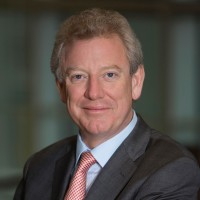
As Vice Chairman of BlackRock, Sir Robert Fairbairn holds one of the most senior positions within the world's largest asset management firm. This role reflects his extraordinary contribution over three decades and his continued strategic importance to the firm's long-term direction.
In this capacity, Fairbairn serves as a strategic advisor to BlackRock's leadership, maintaining deep relationships with the firm's most important global clients and providing counsel on matters of strategic significance. His Vice Chairmanship represents the culmination of a career that has touched virtually every dimension of BlackRock's global business.
The role leverages his unmatched institutional knowledge — spanning client relationships, market dynamics, organizational culture, and competitive positioning — that can only come from being present at every stage of a firm's evolution from a $50 billion manager to a $10 trillion+ global platform.
Global Executive Committee Since Inception
A founding member of BlackRock's most senior leadership body, shaping the firm's strategic direction across every phase of its growth.
Strategic Decision-Making
As a member of the Global Executive Committee since its formation, Fairbairn has been at the center of BlackRock's most consequential strategic decisions — from major acquisitions and market entries to organizational restructuring and talent strategy.
Cross-Functional Influence
His committee membership has provided a unique vantage point spanning investment, distribution, technology, risk, and operations — enabling him to contribute a holistic perspective that few executives in the industry can match.
"Being part of the Global Executive Committee from its earliest days gave me a unique perspective on how to build an institution that could serve clients globally while maintaining the entrepreneurial culture that made BlackRock special."
Leadership Influence Across Divisions
7+
Major Leadership Roles
30+
Years on Executive Committee
5
Business Divisions Led
70+
Countries of Impact
Client Relationships
Built BlackRock's strategic client architecture, transforming how the firm engages with its most important institutional and wealth management relationships across global markets.
Product Strategy
Led strategic product management during BlackRock's most formative years, shaping the product innovation frameworks that continue to drive the firm's competitive positioning.
International Growth
Spearheaded the firm's international expansion, building deep local market expertise while maintaining the consistency and excellence of BlackRock's global platform.
Integration Leadership
Led critical client and distribution integration efforts during BlackRock's two landmark mergers, ensuring continuity and growth through periods of massive organizational change.
Talent & Culture
Co-chaired the Human Capital Committee and served on the Talent Sub Committee — shaping BlackRock's leadership pipeline and organizational culture across a growing global workforce.
Governance Stewardship
Served as a director of U.S. Mutual Fund Boards and chaired the UK Investment Trust Business — bringing governance expertise to the oversight of significant AUM.
Leadership Framework
Principles That Drive Lasting Impact
Robert Fairbairn's leadership philosophy is defined by a set of core principles that have guided his decision-making across every role and responsibility at BlackRock. These principles emphasize long-term relationship building, cultural sensitivity in global operations, and the conviction that exceptional talent is the ultimate competitive advantage.
His approach to leadership has been described as combining strategic clarity with emotional intelligence — the ability to see the long-term trajectory while remaining deeply attuned to the needs and perspectives of clients, colleagues, and stakeholders.